
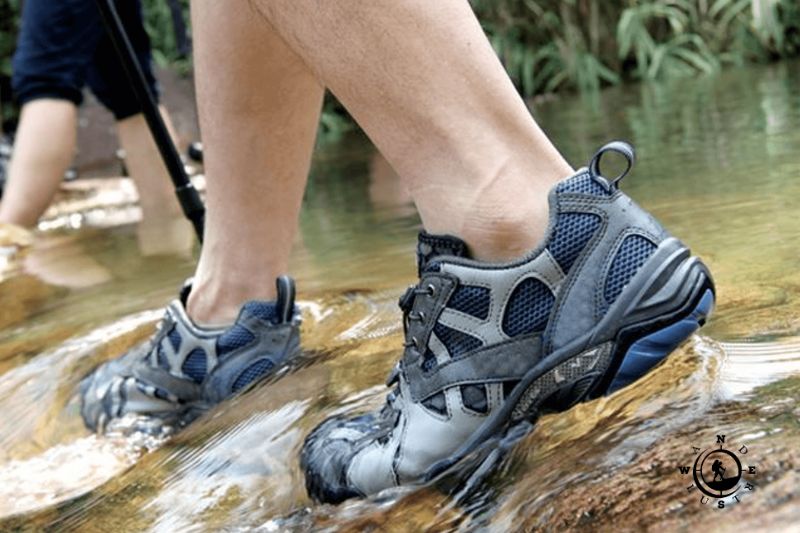
Suitable Footwear for River Crossings
Choosing the right footwear for river crossings is one of the most important factors for the safety, comfort, and enjoyment of a hike in a gorge or on a route with water.
On hiking routes that include river crossings, wet rocks, mud, or continuous contact with water, such as gorges and natural streams, footwear plays a crucial role. A pair of regular sneakers or an old pair of hiking shoes is not always enough. Proper selection, good grip, and practical preparation are essential.
The following guide is designed to help every participant prepare properly, depending on the equipment they already have available.
🔶 Suitable Footwear for River Crossings
For hikes in gorges and routes with water, the most complete option is amphibious footwear, meaning shoes designed for use both on dry ground and in water.
Amphibious shoes offer a better balance between protection, grip, and quick drying. They are suitable for environments where the route alternates between trail, rocks, water, mud, and dirt road.
- They offer better grip on wet surfaces.
- They dry faster than traditional hiking shoes.
- They do not become excessively heavy when wet.
- They provide better protection for the sole of the foot and toes from rocks and impacts.
- They allow more stable movement in water.
🔶 If You Have Amphibious Shoes
If you have amphibious shoes, you can usually complete the entire route with the same pair, from the trail to the river and the dirt road.
- Use the same shoes throughout the hike, provided they are comfortable and already tested.
- Make sure they fit well and do not slip on your foot when wet.
- Avoid wearing them for the first time on a long route.
- Always carry a clean and dry pair of shoes for the return.
For the bus or car, it is essential to have a second clean and dry pair of footwear, such as sneakers, trainers, sandals, or flip-flops.
🔶 If You Do Not Have Amphibious Shoes
If you do not have amphibious shoes, you can still participate with an alternative solution, as long as you bring a second pair of shoes and socks.
In this case, the most practical solution is to start the route with trainers or old hiking shoes that you do not mind getting wet.
- Start the route with shoes that have a good sole and provide stability.
- After the river crossing, when the route continues on dry ground or dirt road, change shoes.
- Carry a second pair of trainers or hiking shoes in your backpack.
- Also carry a second pair of socks.
- For the return to the bus or car, keep a separate clean and dry pair of footwear.
🔶 Why Anti-Slip Protection Is Important
Wet rocks, stones in the water, mud, and algae significantly increase the risk of slipping during a river crossing.
The right sole is perhaps the most important feature of footwear for this type of route. Shoes with good anti-slip grip reduce the risk of falling and help the hiker move with greater confidence.

- Avoid shoes with smooth or worn soles.
- Choose soles with strong tread and good grip.
- Check the condition of the sole before the activity.
- Do not use shoes that slip easily on stone or tile.
🔶 Quick Drying and Drainage
One of the main advantages of amphibious shoes is that they drain water quickly and do not become excessively heavy during the hike.
Regular trainers or hiking shoes retain more water, become heavier, and may cause discomfort, friction, or blisters. In contrast, footwear designed for use in water has materials and construction that allow better drainage.

- They dry faster.
- They allow water to drain from inside the shoe.
- They reduce the feeling of weight on the foot.
- They limit the chance of irritation and blisters.
🔶 Alternative Footwear Options
If amphibious shoes are not available, alternative footwear options can be used, but each solution has specific limitations.
Old Hiking Shoes
- They provide good support and protection.
- They can be used if you do not mind them getting wet.
- They become quite heavy when filled with water.
- They dry slowly and may cause blisters.
Trainers with a Good Sole
- They are lighter and easier to use.
- Old running shoes with a sole that still has good grip are preferable.
- They do not always provide sufficient toe and foot protection.
- They are not ideal for long periods of movement in water and over rocks.
Water Shoes or Aqua Shoes
- They dry quickly and are lightweight.
- They are suitable only for very short passages through water.
- They do not provide sufficient protection for proper hiking.
- They are not recommended for long distances over rocks, trail, or gorge terrain.
🔶 What You Should Avoid
Certain types of footwear are not suitable for river crossings because they increase the risk of injury, slipping, or loss of stability.
- Flip-flops or slides, because they come off the foot easily and offer no stability.
- Sandals without proper toe and sole protection.
- Shoes with smooth or worn soles.
- Gym shoes with unsuitable grip.
- New shoes that have not been tested on a hike.
🔶 What to Carry in Your Backpack
Proper preparation is not only about the pair you wear, but also about the extra footwear and accessories you should carry with you.

- A second pair of shoes, especially if you are not using amphibious footwear.
- A second pair of socks.
- A bag for wet shoes.
- A small towel.
- A clean and dry pair of footwear for the return to the bus or car.
🔶 Extra Tip
Always carry a bag for your wet shoes and wet socks.
This way, you protect your backpack, keep the rest of your personal items dry, and avoid making the bus or car dirty after the activity.
🔶 Conclusion
The right footwear for river crossings makes the difference between an uncomfortable and risky experience and a safe, comfortable, and enjoyable hike.
The ideal choice is amphibious footwear, as it combines grip, protection, drainage, and comfort. If this is not available, an alternative solution can be used, as long as there is proper preparation with a second pair of shoes, dry socks, and clean footwear for the return.
In every case, footwear should be selected with safety, stability, and comfort on wet and uneven terrain as the main criteria.
✍️ Article by George Koumpakis

